
3. Shivaji Maharaj as an Engineering Visionary
Home > Article Detail
Author: Shreyas Patil
Date: September 15, 2026
Introduction
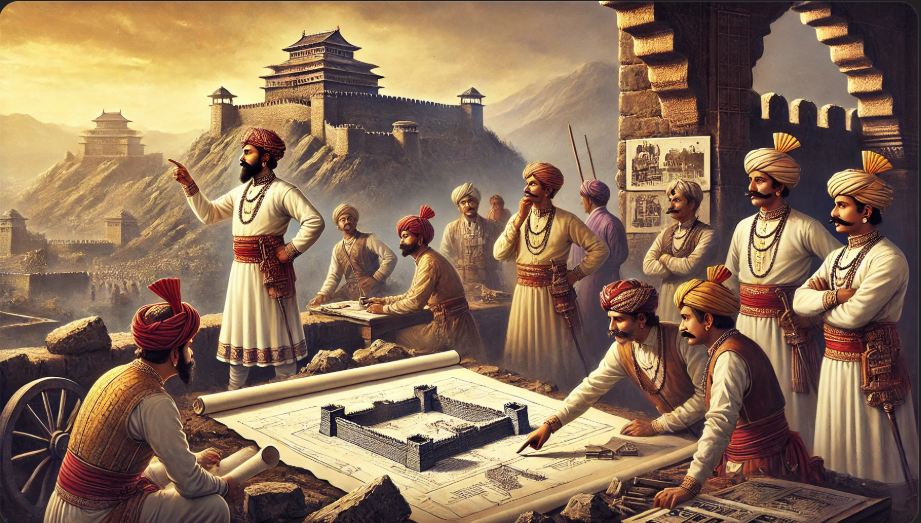
Shivaji Maharaj’s genius extended beyond strategy and administration into the realm of engineering. His ability to leverage natural landscapes, innovate in fortification, and prioritize sustainability in construction set him apart from other rulers of his time. From designing impregnable forts to ensuring sustainable resource management, Shivaji's engineering brilliance played a pivotal role in the success of the Maratha Empire.
In this chapter, we will explore Shivaji Maharaj’s contributions to engineering, focusing on his fort designs, water conservation techniques, and logistical innovations.
The Forts of Shivaji: Marvels of Engineering
Shivaji is often referred to as the "King of Forts" because of the strategic significance he placed on these structures. Each fort was carefully chosen, designed, and fortified to serve specific purposes.
- Raigad Fort: The Nerve Center of the Maratha Empire
- Perched atop a steep hill, Raigad was the capital fort of Shivaji’s empire.
- Key Features:
- Double-layered fortifications: Multiple defensive walls to withstand prolonged sieges.
- Water Conservation: Rock-cut reservoirs and cisterns to store rainwater for year-round use.
- Accessibility: Ropeways and hidden entrances to transport supplies securely.
- Sindhudurg Fort: The Guardian of the Sea
- Built on an island off the Malvan coast, this naval fort was a testament to Shivaji's maritime vision.
- Key Features:
- Strategic Location: Positioned to monitor and control naval activity in the Arabian Sea.
- Camouflaged Design: The fort blended seamlessly with its surroundings, making it hard for enemies to detect.
- Underwater Walls: Designed to withstand tidal waves and enemy ships.
- Pratapgad Fort: A Site of Strategic Triumph
- Famous for the Battle of Pratapgad (1659) against Afzal Khan.
- Key Features:
- Hidden Pathways: Secret routes for supplies and troop movement.
- Natural Defense: The fort utilized cliffs and dense forests as protective barriers.
Innovations in Fort Architecture
Shivaji’s forts were unique due to their adaptability to the surrounding geography and innovative designs:
- Blending with Nature:
- Forts were constructed to integrate with the natural topography, such as hilltops, cliffs, and islands.
- This approach not only reduced construction costs but also enhanced their defensive capabilities.
- Polygonal Layouts:
- Unlike traditional rectangular designs, Shivaji's forts had irregular shapes, making them resistant to cannon fire.
- Hidden Water Tanks:
- Many forts featured concealed water tanks and cisterns, ensuring a steady water supply during sieges.
Water Conservation and Sustainability
Shivaji understood the importance of water resources in warfare and daily administration. His forts and settlements showcased advanced water management techniques:
- Rainwater Harvesting:
- Systems of reservoirs and canals collected and stored rainwater.
- Rock-Cut Tanks:
- Durable and naturally insulated, these tanks ensured water availability even during droughts.
- Stepwells:
- Used for irrigation and drinking purposes, stepwells were common in and around fortifications.
Logistical and Defensive Innovations
Shivaji's engineering genius extended to logistical planning and fort defense:
- Transportation Systems:
- Hidden Ropeways: Enabled swift and secure movement of goods and people to hilltop forts.
- Secret Tunnels: Allowed safe evacuation and surprise counterattacks.
- Fort Communication:
- A network of forts was established to ensure swift communication across the empire.
- Signal systems, including fire torches and drummers, enabled coordination between forts.
Maritime Engineering
Shivaji was one of the few Indian rulers to recognize the importance of a navy. His maritime engineering achievements include:
- Naval Dockyards:
- Created at strategic locations to build and repair ships.
- These dockyards were equipped with advanced tools and skilled craftsmen.
- Fleet Design:
- Ships like the Ghurab and Galbat were specifically designed for shallow coastal waters, ensuring agility and speed.
Engineering Ethics and Sustainability
- Shivaji’s constructions were environmentally friendly, relying on local materials and minimizing ecological disruption.
- His emphasis on long-term usability ensured that many of his forts and water systems remain functional even today.
Legacy of Shivaji’s Engineering
Shivaji’s engineering brilliance left an indelible mark on Indian architecture and fortification. His forts not only symbolized strength but also reflected his vision for sustainability, resilience, and self-reliance. Modern engineers and architects continue to study his designs for inspiration.
Key Takeaways
- Shivaji Maharaj’s forts were marvels of engineering, blending with natural landscapes for maximum defense.
- His focus on water conservation and sustainability ensured the longevity of his constructions.
- Shivaji’s engineering achievements extended to maritime innovation, making him a pioneer in naval defense.
Activity Corner
- Model Making: Create a 3D model or sketch of Raigad or Sindhudurg Fort, highlighting its unique features.
- Field Visit: Organize a trip to a local fort to study its design and water conservation techniques.
- Research Task: Compare Shivaji’s fort designs with modern architectural practices for sustainability.
Conclusion
This chapter showcases Shivaji Maharaj’s contributions to engineering and design, emphasizing how his innovative approaches ensured the success of the Maratha Empire. It encourages students to think about the interplay between architecture, sustainability, and strategy.